
Stainless Steel 316 Fittings Manufacturer & Supplier

SS 316 Buttweld

SS 316 Elbows

SS 316 Tees

SS 316 Reducers

SS 316 End Caps
SS 316 Pipe Fittings Supplier in India
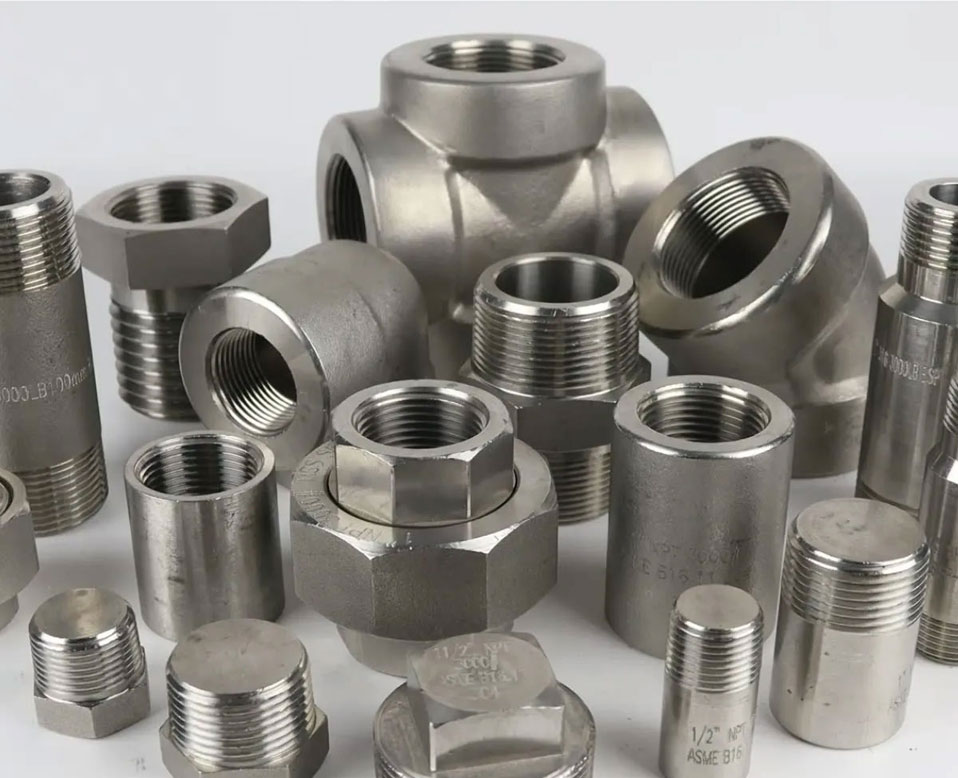
Stainless steel 316 fittings are piping components that join pipes, change flow direction, form branch connections and link different pipe sizes within industrial systems. The grade carries 2 to 3% molybdenum, which lifts resistance to pitting and crevice attack in chloride-bearing service compared with 304. Selection depends on the operating environment and the applicable piping specification.
Rico Steel has three decades of experience in the steel industry and manufactures and supplies steel pipes, tubes, sheets, coils, and wire. Fitting types, sizes, and configurations vary. Buyers can enquire about material specifications and supply requirements, subject to product availability.
+91 9820010544
Stainless Steel 316 Fittings Specifications
The table below sets out the standards, dimensional references, size range, schedules and surface conditions that apply to SS 316 Fittings across buttweld, forged and plate-type components supplied against order.
| Product | Stainless Steel 316 Fittings |
| Grade / UNS | 316 (UNS S31600), 316L (UNS S31603) |
| Material standards | ASTM A403 / ASME SA403 (wrought buttweld), ASTM A182 (forged) |
| Dimensional standards | ASME B16.9, ASME B16.28, MSS SP-43 (buttweld); ASME B16.11 (forged) |
| Size range | 1/2" to 48" NPS (buttweld); 1/8" to 4" NPS (forged) |
| Schedules | SCH 5S, 10S, 40S, 80S, 160, XXS |
| Manufacturing route | Seamless, welded, fabricated |
| End connections | Buttweld, socket weld, threaded (NPT / BSP) |
| Surface condition | Pickled and passivated, polished |
| Testing | As specified in the purchase order |
| Documentation | Mill test certificate to EN 10204 3.1, where applicable |
Types of Stainless Steel 316 Fittings and Related Components
The following families cover most SS 316 piping work, from direction changes and branch connections to plate-type fixings and anchoring hardware.
SS 316 Buttweld Fittings
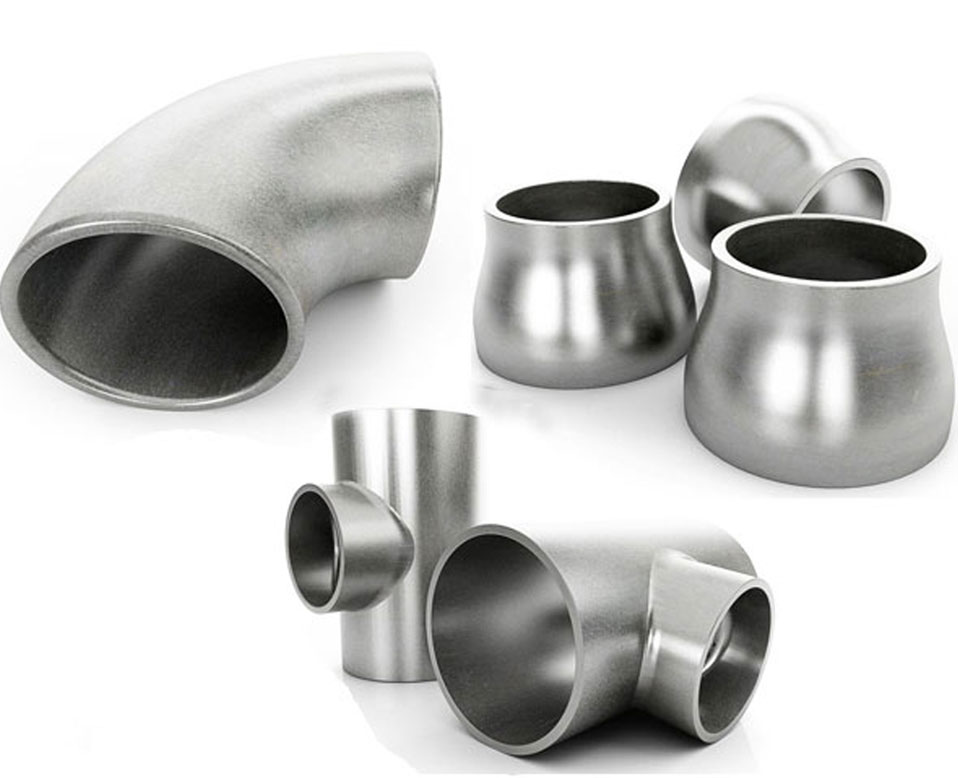
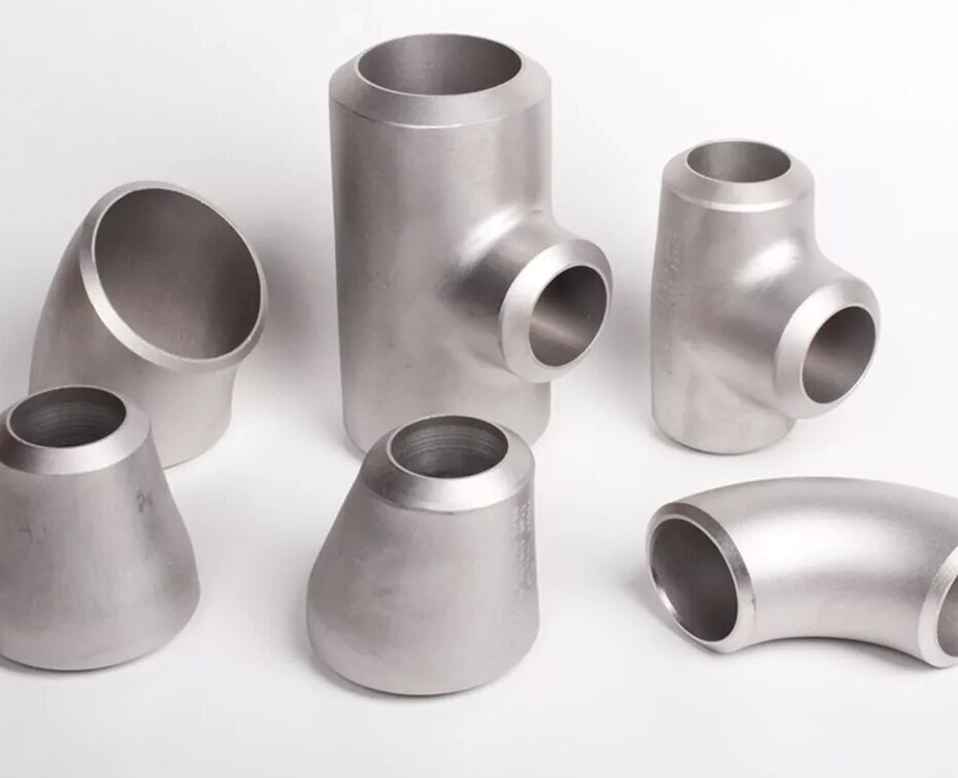
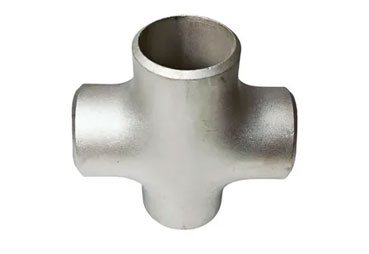
SS 316 buttweld fittings join to pipe ends by full-penetration welds, giving a continuous bore. ASME B16.9 governs dimensions. Wall thickness matches the mating stainless steel 316 pipe schedule exactly.
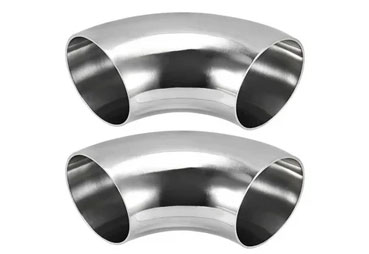
SS 316 Elbow Fittings
Elbow fittings turn the line through 45 or 90 degrees. Long radius patterns use a centreline radius of 1.5D; short radius elbows sit at 1D and suit constrained pipework layouts.
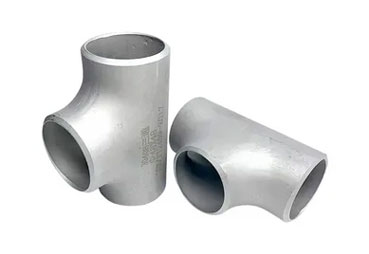
SS 316 Tee Fittings
Tees create a branch at 90 degrees to the run. Equal tees carry the same bore on all three outlets; reducing tees drop the branch to a smaller nominal size.
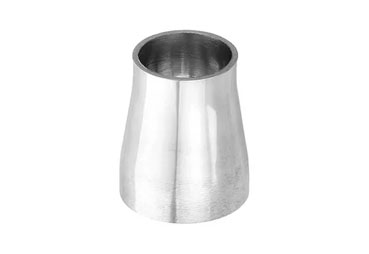
SS 316 Reducer Fittings
Reducers connect two pipe sizes. Concentric types share a common centreline and suit vertical runs, while eccentric types keep one side flat, which prevents vapour pockets along horizontal lines.
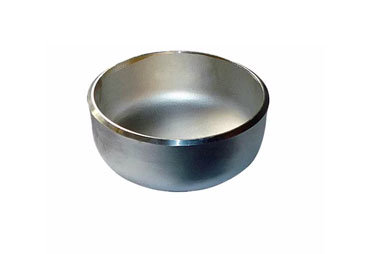
SS 316 End Caps
End caps close the end of a pipe run. The cap welds onto the pipe and seals the bore, so pressure testing, future extension and temporary isolation all remain practical.
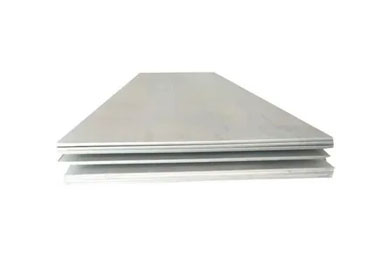
SS 316 Base Plates
Base plates sit between pipe supports and the structure below, spreading load across a wider footing. Thickness, hole pattern and plate size follow the support drawing rather than a pipe standard.
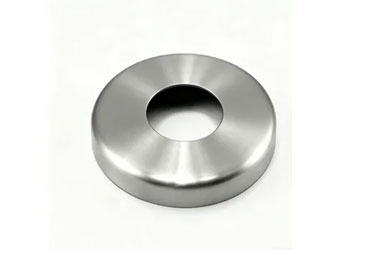
SS 316 Cover Plates
Cover plates close openings on tanks, housings and enclosures. Fabricators cut them from stainless steel 316 sheets to the drawing, then drill or machine the plate for bolting into position.
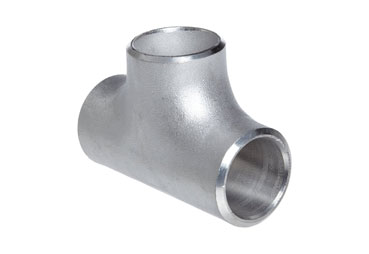
SS 316 T-Points
T-points form a three-way junction in structural and light pipework assemblies. Dimensions come from the fabrication drawing, and fabricators weld or bolt the joint depending on the chosen assembly method.
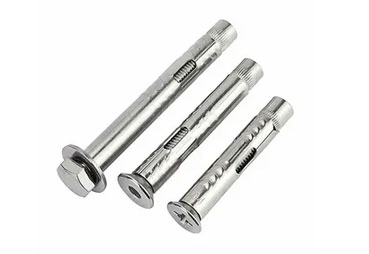
SS 316 Anchor Fasteners
Anchor fasteners fix pipe supports, brackets and base plates to concrete or steel. Grade 316 suits exposed and damp locations where carbon steel anchors corrode within a few seasons.
Properties of Stainless Steel 316 Fittings
Composition and mechanical values below follow ASTM A403 WP316, the wrought austenitic standard that most buyers order SS 316 fittings against.
| Carbon (C) | 0.08% max |
| Chromium (Cr) | 16.0 to 18.0% |
| Nickel (Ni) | 10.0 to 14.0% |
| Molybdenum (Mo) | 2.00 to 3.00% |
| Manganese (Mn) | 2.00% max |
| Silicon (Si) | 0.75% max |
| Phosphorus / Sulphur | 0.045% max / 0.030% max |
| Iron (Fe) | Balance |
| Tensile strength | 515 MPa min (75 ksi) |
| Yield strength (0.2% offset) | 205 MPa min (30 ksi) |
| Elongation in 50 mm | 35% min |
| Hardness | 217 HBW max / 95 HRB max |
| Density | 8.0 g/cm³ |
| Melting range | 1370 to 1400 °C |
| Elastic modulus | 193 GPa |
| PREN | approx. 24 to 25 |
Stainless Steel 316 Fittings Price
Pricing moves with three criteria: fitting type and size, manufacturing route (seamless, welded or fabricated), and order quantity. Figures below are indicative and shift with nickel and molybdenum rates.
| Fitting Type | Size Range | Approx. Price (INR) |
|---|---|---|
| SS 316 Buttweld Elbow (90° / 45°) | 1/2" to 24" | 480 to 760 per kg |
| SS 316 Buttweld Tee (equal / reducing) | 1/2" to 24" | 520 to 820 per kg |
| SS 316 Buttweld Reducer | 1/2" to 24" | 500 to 780 per kg |
| SS 316 End Cap | 1/2" to 24" | 450 to 700 per kg |
| SS 316 Base Plate / Cover Plate | As per the drawing | 420 to 650 per kg |
| SS 316 Anchor Fastener | M6 to M24 | 60 to 240 per piece |
Prices exclude GST and freight. Confirm current rates at the time of enquiry.
Applications of Stainless Steel 316 Fittings
Material compatibility and operating conditions determine suitability. The eight sectors below specify SS 316 fittings where service chemistry supports the grade.
Chemical Processing
Chemical plants run SS 316 fittings on piping that carries selected corrosive media, with acid type, concentration and temperature checked against grade limits first.
Marine Environments
Marine installations exposed to salt-laden air and certain chloride-containing conditions use the grade, though stagnant seawater service calls for a higher-alloy material.
Pharmaceutical Industry
Pharmaceutical process piping depends on material compatibility and cleanliness. Internally smooth fittings with pickled or polished surfaces limit product hold-up at joints.
Food and Beverage Processing
Food and beverage lines need corrosion resistance against brines, acids and cleaning chemicals, plus hygienic design that drains fully and leaves no crevices.
Water Treatment
Water treatment schemes select fittings based on water chemistry. Chloride level, pH and residual disinfectant affect whether 316 holds up in a given circuit.
Oil and Gas Industry
Oil and gas piping follows process conditions and the governing standard. Sour service, wellhead temperature and pressure class restrict where 316 fittings qualify.
Industrial Manufacturing
Manufacturing plants fit them at equipment connections and along process piping, where stainless steel 316 coils and plate feed the surrounding fabricated structures.
General Engineering and Fabrication
Fabrication shops use SS 316 fittings in piping assemblies and skid-mounted units whenever the project specification calls for the grade in that assembly.
Benefits of Stainless Steel 316 Fittings
Practical gains from the grade show up in corrosion behaviour, mechanical service, fabrication and lifecycle cost across suitable applications.
- Molybdenum improves resistance to pitting and crevice corrosion in many chloride-containing environments, which is the main reason specifiers move from 304 to 316.
- The grade offers mechanical properties suited to industrial service, holding a minimum tensile strength of 515 MPa at room temperature.
- Different fitting types handle direction changes, branch connections and pipe-size transitions, so one material grade covers most of a piping layout.
- Welded assemblies perform well when fabricators follow correct procedures, including controlled heat input and matching 316 or 316L filler.
- Sound material selection helps manage maintenance requirements, since fewer corrosion-driven replacements reduce shutdown time on the affected line.
- Durability and full recyclability add to lifecycle value, particularly on installations that stay in service for 15 years or more.
Actual performance depends on the grade selected, fabrication quality, operating conditions and maintenance practice at the site.
Quality Control and Material Documentation
Quality control on SS 316 fittings starts with material grade verification against the purchase specification. Dimensional inspection covers bore, wall thickness, centreline radius and end preparation, while surface-condition checks pick up scale, embedded iron and weld defects. Material certificates and heat-number traceability support the grade claim, where applicable. Any further inspection or testing, including non-destructive methods, applies when the order specifies.
Why Choose Rico Steel for SS 316 Fittings?
Rico Steel works as a stainless steel 316 fittings supplier to buyers sourcing components for industrial piping, covering buttweld, forged and plate-type options. Our team helps match product types, dimensions and specifications to the line class in use. We coordinate order quantities and technical requirements before confirmation and provide quality documentation where available. Packaging and dispatch follow the agreed order terms. Project-specific enquiries, including non-standard sizes or configurations, receive a direct answer on availability. Contact our team to confirm current availability for your requirement.
FAQs
What are Stainless Steel 316 Fittings used for?
They connect pipes, change flow direction, form branch lines and join different pipe sizes in industrial systems. Chemical, marine, pharmaceutical and water treatment piping all use them where the specification allows.
What are SS 316 buttweld fittings?
SS 316 buttweld fittings weld directly to pipe ends, producing a continuous bore with no mechanical joint. ASME B16.9 sets the dimensions, and wall thickness matches the connected pipe schedule.
What is the difference between SS 316 and SS 316L fittings?
Carbon content separates them. 316L caps carbon at 0.03% against 0.08% for 316, which cuts carbide precipitation at weld zones and suits assemblies with heavy welding.
Are SS 316 fittings suitable for marine applications?
Often, though not universally. The grade handles salt-laden atmospheres and certain chloride conditions, while warm stagnant seawater or high chloride concentrations usually call for duplex material.
What are the common types of SS 316 pipe fittings?
Elbows, tees, reducers and end caps cover routine piping work. Base plates, cover plates, T-points and anchor fasteners handle support, closure and fixing duties on the same installations.
Can SS 316 fittings be welded?
Yes, with standard TIG, MIG or stick procedures and matching 316 or 316L filler. Controlled heat input and post-weld cleaning protect corrosion resistance at the joint.
What sizes are available in Stainless Steel 316 Fittings?
Buttweld types run from 1/2 inch to 48 inch NPS in schedules 5S to XXS, while forged fittings cover 1/8 inch to 4 inch. Rico Steel confirms availability per enquiry.