

SS 304 Seamless Pipes

SS 304 Welded Pipes

SS 304 Square Pipes

SS 304 Rectangle Pipes

SS 304 Round Pipes
SS 304 Seamless Pipes
SS 304 Welded Pipes
SS 304 Square Pipes
SS 304 Rectangle Pipes
SS 304 Round Pipes

SS Seamless Pipes

SS Welded Pipes

SS Square Pipes

SS Rectangle Pipes

SS Round Pipes
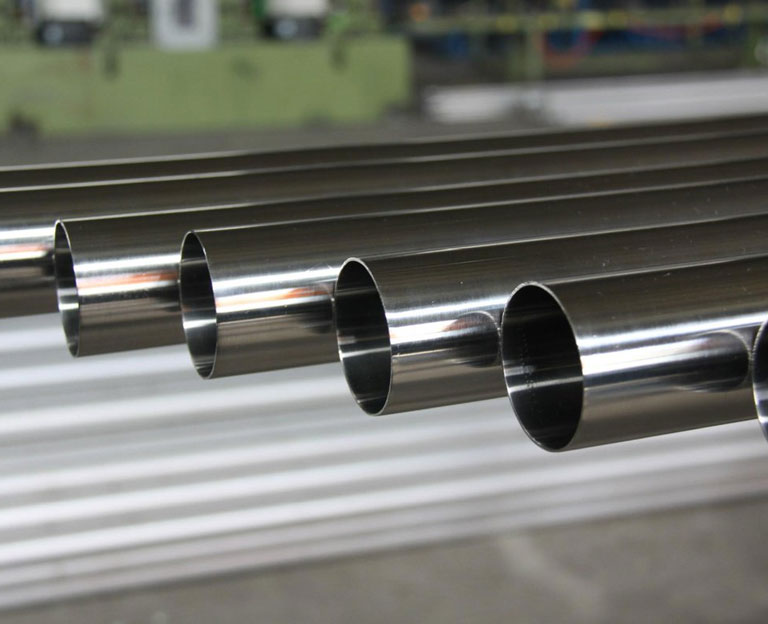
SS 304 ERW pipe carries the designations UNS S30400, EN 1.4301 and JIS SUS 304. It combines 18 to 20% chromium with 8 to 10.5% nickel for corrosion resistance. Electric resistance welding forms a flat strip into a cylinder and fuses the seam with high-frequency current, without filler metal. Welded construction gives tight dimensional control, a smooth bore and a uniform wall. Kenyan project teams comparing it with stainless steel seamless pipes weigh cost, pressure rating and availability.
+91 9820010544
Dimensions follow ASME B36.19M for stainless steel welded pipe, while mechanical and decorative products follow ASTM A554. The table lists supply ranges for 304 ERW pipe across each specification parameter.
| Parameter | Specification |
| Outside diameter | 12.7 mm to 219.1 mm standard; 273 mm to 610 mm large diameter |
| Wall thickness and schedule | 0.8 mm to 12.7 mm; Schedule 5S, 10S, 40S and 80S |
| Standard and custom lengths | 6 m standard; random lengths 4 m to 7 m; custom cut lengths on order |
| Pipe ends | Plain, beveled at 37.5 degrees, threaded (NPT or BSP) where applicable |
| Surface finish | Mill, polished (180 to 400 grit), satin, BA |
| Applicable standards | ASTM A312, A554, A269; ASME SA312, B36.19M |
Five product forms cover structural, hygienic and architectural requirements. Each form differs in cross section, finish or diameter, so specification begins with the end use.

Round pipe serves as the standard form, covering 12.7 mm to 219.1 mm outside diameter in Schedule 5S to 80S walls. It suits water lines, handrails, frames and process piping.

Polished pipe passes through abrasive belts from 180 up to 400 grit, which produces a uniform directional or mirror surface. Food and visible installations choose it for easy surface cleaning.

Decorative pipe follows ASTM A554 and arrives in satin, mirror or brushed patterns. Architects specify it for railings, balustrades, door pulls and canopies where appearance matters as much as strength.

Large diameter pipe extends from 273 mm to 610 mm outside diameter with walls up to 12.7 mm. Municipal water mains, storage tank connections and structural columns use these sizes.

Square and rectangular pipe ranges from 10 by 10 mm to 100 by 100 mm sections under ASTM A554. Furniture frames, shopfronts and machinery guards rely on their flat faces.
WE OFFER HIGH-QUALITY 304 STAINLESS STEEL ERW PIPES IN KENYA. WE ARE A MANUFACTURER & SUPPLIER OF SS 304 ERW PIPES, AVAILABLE IN VARIOUS SIZES, WALL THICKNESSES, AND SURFACE FINISHES TO MEET DIFFERENT INDUSTRIAL, ARCHITECTURAL, AND DECORATIVE REQUIREMENTS.
Each designation below identifies the equivalent austenitic grade under a different system. The table maps every identifier to its origin and the point buyers check before ordering SS 304 pipe.
| Designation | System or Body | Scope and Key Point |
| UNS S30400 | Unified Numbering System | Base identity of SS 304 |
| EN 1.4301 (X5CrNi18-10) | European standards | Equivalent grade in the European system |
| JIS SUS 304 | Japanese Industrial Standards | Equivalent grade in the Japanese system |
| ASTM A312 | ASTM | Seamless and welded austenitic pipe; carbon limited to 0.08% |
| ASTM A554 | ASTM | Mechanical tubing |
| ASME SA312 | ASME | Adopts A312 for pressure code work |
| UNS S30403 | Low-carbon variant | 304L stainless steel pipe caps carbon at 0.03% for heavy welding |
ERW construction starts with a cold-rolled strip of certified thickness, so the finished pipe holds outside diameter tolerance and wall thickness within narrow limits. Uniform walls help bending, flaring and cutting behave predictably on site. Austenitic structure also gives good weldability, so fabricators join sections with TIG or MIG processes. Fabrication shops value that consistency, and buyers gain access to diameters from 12.7 mm to 610 mm in mill, polished, satin and BA finishes.
Six sectors specify 304 ERW pipe, and each sets different priorities for finish, wall thickness and corrosion resistance across the working life of the installation.
Handrails, balustrades, curtain wall supports and facade frames use polished or satin pipe in 38 mm to 114 mm diameters. The satin finish holds its appearance outdoors with routine washing.
Potable water lines, pump station piping and building services use schedule 10S and 40S walls. Smooth bore surfaces lower friction losses and resist scale buildup that narrows the flow area.
Dairies, breweries and bottling plants install polished pipe for product transfer and utility lines. The smooth interior cleans readily and withstands the sanitising agents used in daily plant hygiene programmes.
Hospitals, schools, airports and shopping centres install 304 pipe for stair rails, ventilation frames and service risers. Unpainted stainless needs no repainting cycle, which suits buildings where access is limited.
Workshops cut, bend and weld 304 ERW pipe into conveyor frames, machine guards, platforms and support structures. Consistent wall thickness keeps bend radii and weld fit-up predictable between batches.
For plants handling mild acids, detergents, brines and cooling water, select 304 for low-pressure transfer lines. Chloride-rich or strongly acidic duties require 316 instead due to its added molybdenum. Some environments may require duplex or higher-alloy materials.
Mill finish leaves the pipe with the surface produced by forming, welding and annealing, and it suits concealed or process lines. Polished finish runs from 180 to 400 grit, reaching a mirror face. Satin finish gives a uniform brushed grain that hides fingerprints. BA finish, produced by bright annealing in a controlled atmosphere, delivers a reflective surface. Plain ends suit welding and couplings, beveled ends at 37.5 degrees prepare butt welds, and threaded ends serve small connections where applicable.
Testing starts at the coil, where spectrometer analysis confirms that chromium, nickel and carbon sit within the 304 limits of ASTM A312. Inspectors then examine weld seams and surfaces for pits, scratches and incomplete fusion, and measure outside diameter, wall thickness and length against order tolerances. Hydrostatic testing proves leak tightness where the order requires it, and eddy current or ultrasonic nondestructive testing checks the weld where specified. Each shipment carries a Material Test Certificate that records heat number, chemistry, mechanical properties and test results for traceability.
Specification errors lead to rework, so confirm each parameter before ordering. Eight factors define the correct pipe for a project, and each one should appear on the purchase enquiry in writing. Matching them early avoids delays at the fabrication stage and keeps site schedules intact.
304 stainless steel ERW pipe pairs austenitic corrosion resistance with a welded seam that holds a consistent diameter and wall thickness. That profile fits commercial buildings, industrial workshops, food plants and construction sites across Kenya, provided the duty stays within the limits of the grade. The correct specification matters more than the grade label alone. Wall thickness, finish, length, end type and test documentation each affect cost, installation speed and service life, so buyers who define all five on the enquiry receive pipe that installs without modification.
Rico Steel, a manufacturer and stockist of stainless steel welded pipes, supplies round pipe from 12.7 mm to 610 mm outside diameter in schedules 5S to 80S.
Yes. Polished grades run from 180 to 400 grit, and satin, brushed and BA surfaces are also available for railings, food plants and architectural work.
ASTM A312 and ASME SA312 govern pipe for pressure and general service, ASTM A554 covers mechanical and decorative tubing, and ASME B36.19M sets dimensions.
This material is mainly used in architectural railings, water and utility lines, and industrial fabrication. Additionally, it supports institutional buildings, food and beverage processing, and light chemical exposure in mild environments.
Grade 304 suits sheltered coastal locations with routine freshwater washing, while direct salt spray and splash zones near Mombasa call for 316 or duplex grades.
Rico Steel is a prominent manufacturer of Stainless Steel Welded Pipes and Tubes. The management always set benchmarks and push development forward in metallurgy. Stainless Steel Welded Pipes & Tubes stockist of all sizes and grades.