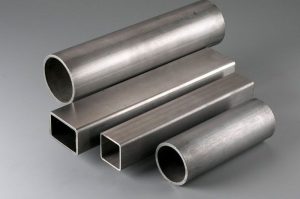


Stainless steel railing pipe is used to fabricate railings for staircases, balconies, terraces, and glass balustrades. Fabricators work with three grades: 202, 304, and 316, and three shapes: round, square, and rectangle. Buyers choose it for corrosion resistance, a range of decorative finishes, and suitability for indoor and outdoor railing applications. This guide covers ss pipe railing design ideas, sizes, grades, finishes, and what to specify with a fabricator.
Why stainless steel is chosen for railing pipe
Five reasons drive the switch to stainless steel railing pipe:
- Corrosion resistance: chromium forms a passive layer that rebuilds itself, even in coastal air.
- Outdoor service life: finish holds for years without repainting.
- Strength at thin walls: slimmer profiles carry the same load.
- Finish range: mirror, satin and PVD suit different settings.
- Recyclability: Stainless steel can be recovered and recycled at the end of its service life.
SS pipe railing designs for staircases
Three ss pipe railing design for stairs patterns come up most:
- Vertical baluster, round top rail: balusters space between newel posts, topped with a rail bent to the tread line.
- Horizontal multi-line rail: three or four horizontal pipes open the sightline on landings.
- Slotted pipe, glass infill: slotted rails grip glass, posts carry the load.
NBC 2016 sets handrail height at roughly 900 mm from the stair nosing.
SS pipe railing designs for balconies and terraces
Balcony and terrace railings are exposed to wind loading, while coastal and elevated locations can also increase exposure to airborne chlorides.
- Square frame, vertical fillers: posts anchor to the parapet, filled with balusters.
- Square frame, glass: the same frame holds toughened glass instead.
- Mixed round and square: square posts pair with a round top rail.
NBC 2016 sets a minimum balcony and terrace height of around 1 metre from finished floor level.
Glass and cable railing built with SS pipe
SS glass railing design uses stainless pipe as the frame while glass or cable fills the gap. A slotted channel grips the glass edge, or posts carry spigot and standoff fittings that clamp the panel. Cable infill runs through drilled posts, turnbuckles keeping tension across the spacing.
Round, square and rectangle pipe choosing the shape
Shape affects grip, weld lines, and glass seating.
| Shape | Use | Sizes | Why chosen |
| Round | Handrails, balusters | 25–50 mm OD | Comfortable grip |
| Square | Posts, frames | 25×25–50×50 mm | Flat face welds cleanly |
| Rectangle | Top rails | 40×20–60×30 mm | Flat face for glass seating |
| Slotted | Glass channel | 40–50 mm | Grips glass edge |
SS railing pipe sizes and thickness
Size and thickness shift by where the pipe sits.
| Component | Shape | Size | Thickness |
| Handrail | Round | 38–50 mm OD | 1.2–1.6 mm |
| Post | Square/round | 40–50 mm | 1.6–2 mm |
| Baluster | Round | 15–25 mm OD | 1–1.2 mm |
| Glass frame | Square/rect | 40×20–50×50 mm | 1.6–2 mm |
Check Rico’s ss railing pipe size chart and weight chart before ordering.
Which grade suits which railing 202, 304 and 316
Grade choice comes down to the air the railing sits in.
SS 202 railing pipe
Manganese replaces part of the nickel, lowering cost and suiting dry, sheltered railings.
SS 304 railing pipe
SS 304 railing pipe (UNS S30400, 1.4301) is the standard grade indoors and outdoors.
SS 316 railing pipe
Molybdenum in 316 railing pipe raises chloride resistance, the coastal choice.
Finishes available on SS railing pipe
Mirror finish: high-gloss look for lobbies; shows fingerprints.
Satin or hairline: brushed, low-glare finish for outdoor exposure.
Matt: flat, non-reflective surface for interiors.
Gold, rose gold and black PVD: coated colour finishes that hold tone outdoors better than plain polished surfaces.
What to specify when you order railing pipe
- Grade 202, 304 or 316.
- Shape round, square, rectangle or slotted.
- Outside diameter per the drawing.
- Wall thickness sets load capacity.
- Finish mirror, satin, matt or PVD colour.
- Length or quantity check against the weight chart.
Ricostainless is a Mumbai-based ss railing pipe manufacturer and stockist, with export supply and mill test certificates on enquiry.
Frequently Asked Questions
Which grade of SS pipe is best for outdoor railing?
304 handles most outdoor railings; 316 suits coastal spots.
What thickness of SS pipe is used for railing?
Handrails run 1.2–1.6 mm; posts use 1.6–2 mm.
What is the difference between 202 and 304 railing pipe?
202 swaps in manganese for part of the nickel, limiting it to dry spots; 304 handles both.
Which SS pipe size is used for a staircase handrail?
Most handrails use 38–50 mm OD round pipe, at roughly 900 mm above the nosing.
Does stainless steel railing rust near the coast?
304 can pit in salt-laden air over time; 316 resists chloride better.
What finish is best for an outdoor SS railing?
Satin or hairline hides fingerprints better than a mirror polish.